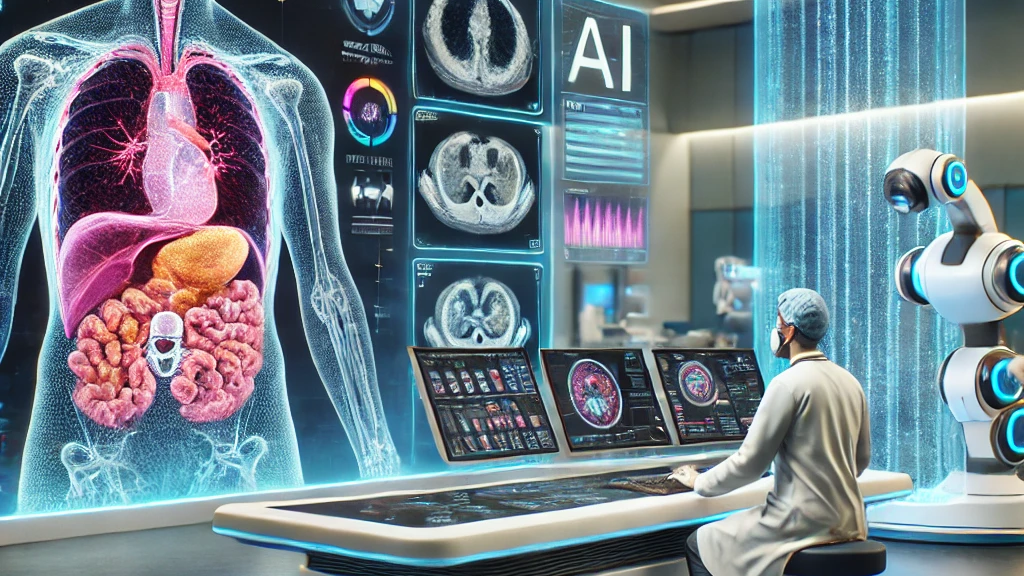
A few years ago, “AI diagnosing disease” sounded like science fiction. Now it’s quietly becoming part of everyday medical practice. AI in healthcare diagnosis is genuinely changing how early certain conditions can be detected.
I was skeptical about this whole trend until reading about AI systems catching early-stage cancers in scans that radiologists had initially marked as clear. That’s the kind of thing that actually shifts your perspective.
How AI in Healthcare Diagnosis Actually Works
AI in healthcare diagnosis typically involves machine learning models trained on massive datasets of medical images, lab results, or patient records, learning to spot patterns that might be subtle or easy to miss for even experienced clinicians.
Quick answer: AI in healthcare diagnosis works by analyzing large volumes of medical data, such as imaging scans or lab results, to identify patterns associated with disease, often flagging potential issues faster and with high consistency compared to manual review alone.
Areas Where AI Diagnosis Is Making the Biggest Impact
- Radiology — detecting tumors, fractures, and abnormalities in scans
- Pathology — analyzing tissue samples for cancer markers
- Ophthalmology — screening for diabetic retinopathy from eye scans
- Cardiology — detecting irregular heart rhythms from ECG data
- Dermatology — flagging suspicious skin lesions for further review
Why AI Can Catch What Humans Sometimes Miss
- Consistency — AI doesn’t get tired or distracted during long shifts
- Pattern recognition across millions of prior cases
- Ability to flag extremely subtle changes invisible to the naked eye
- Faster processing of large volumes of scans or data
The Human Element That AI Doesn’t Replace
Quick answer: AI in healthcare diagnosis is generally used as a decision-support tool rather than a replacement for doctors, flagging potential concerns for human specialists to review, confirm, and contextualize within a patient’s full medical picture.
Doctors still make the final call — AI is genuinely more of a highly efficient second opinion than an autonomous diagnostician, at least with current, responsibly deployed systems.
Real-World Examples Worth Knowing
- AI models detecting diabetic retinopathy from routine eye photographs
- Breast cancer screening tools flagging suspicious mammogram regions
- Skin cancer detection apps assisting dermatologists with lesion analysis
- AI-assisted ECG analysis catching irregular heart rhythms early
Limitations and Concerns With AI Diagnosis
- Accuracy depends heavily on the quality and diversity of training data
- Bias in datasets can lead to reduced accuracy for underrepresented groups
- Over-reliance without human oversight carries genuine risk
- Regulatory and ethical frameworks are still catching up to the technology
What This Means for Patients Going Forward
You’re increasingly likely to encounter AI somewhere in your diagnostic journey, even without realizing it — many hospitals now use it quietly in the background for scan analysis. Being aware of this shift helps you ask better, more informed questions during your own care. [link to wearable health devices guide here]
FAQs
Q1. Is AI diagnosis more accurate than doctors? In specific, narrow tasks like image analysis, AI can match or exceed human accuracy, but doctors remain essential for overall clinical judgment.
Q2. Will AI eventually replace doctors for diagnosis? Unlikely in the foreseeable future — it’s generally positioned as a support tool rather than a replacement for clinical expertise.
Q3. Is AI diagnosis available in regular hospitals yet? Increasingly yes, particularly in radiology, pathology, and ophthalmology departments in many hospitals.
Q4. Can AI diagnosis have bias or errors? Yes, if trained on non-diverse datasets, AI models can show reduced accuracy for certain populations, which is an active area of ongoing improvement.
Q5. Should patients trust an AI-assisted diagnosis? It’s reasonable to trust AI as one part of a broader diagnostic process, always confirmed and interpreted by a qualified doctor.
Conclusion
AI in healthcare diagnosis is genuinely reshaping how early certain conditions get caught, often working quietly in the background of routine scans and tests. It’s not replacing doctors anytime soon, but it is making their work faster and, in many cases, more accurate. As a patient, it’s worth simply being aware this technology may already be part of your care journey.
Suggested image alt text: “doctor reviewing medical scan with AI diagnostic assistance on screen”
This material is educational and is not a substitute for professional medical advice, diagnosis, or treatment.
 Fig. 4