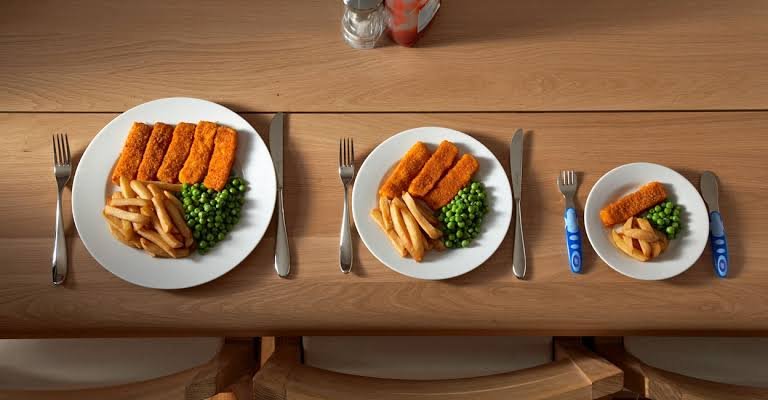
Diets that ban entire food groups rarely last. What actually tends to work, long-term, is simpler: portion control for weight loss, without needing to overhaul everything you eat.
I tried multiple restrictive diets over the years, and every single one failed within a few months. Portion awareness, oddly, is the only approach that’s stuck for me.
Why Portion Control for Weight Loss Works Better Than Restriction
Portion control for weight loss works because it doesn’t trigger the psychological rebound that strict food bans often do. You still eat the foods you enjoy — just adjusted amounts.
Quick answer: Portion control for weight loss works by creating a moderate calorie deficit without eliminating entire food groups, making it more sustainable long-term compared to restrictive diets that often lead to rebound overeating.
The Plate Method: A Simple Visual Guide
- Half your plate: vegetables and salad
- Quarter of your plate: lean protein
- Quarter of your plate: whole grains or starchy vegetables
- Small portion: healthy fats like nuts or ghee
Using Your Hand as a Portion Guide
- Palm-sized portion = protein
- Fist-sized portion = vegetables
- Cupped hand = carbohydrates like rice or roti
- Thumb-sized portion = fats and oils
This method genuinely travels well since your hand is always with you, unlike a food scale.
Common Portion Control Mistakes
Quick answer: The biggest portion control mistake is eating directly from large packages or serving bowls, which makes it nearly impossible to gauge how much you’ve actually consumed.
Always plate your food rather than eating straight from a bag — this single habit change makes a bigger difference than people expect.
Slowing Down: An Underrated Portion Control Tool
It takes roughly 15-20 minutes for your brain to register fullness. Eating quickly means you often finish a full portion before your body even signals satisfaction, leading to unnecessary overeating.
Practical Tips for Eating Out
- Ask for a half portion or box half immediately
- Share a starter instead of ordering individually
- Choose grilled over fried when possible
- Skip the bread basket if it’s not something you genuinely want
Portion Control Without Obsessive Calorie Counting
You don’t need to track every gram forever. Once you’ve practiced the plate method and hand-portion guide for a few weeks, it becomes fairly intuitive without needing constant measuring. [link to sleep and weight loss guide here]
FAQs
Q1. Is portion control better than counting calories? Both work, but portion control tends to be more sustainable for people who find calorie tracking tedious or stressful long-term.
Q2. How long does it take to get used to smaller portions? Most people adjust within 2-3 weeks as their stomach and appetite recalibrate.
Q3. Can portion control work without exercise? Yes, though combining it with regular activity generally produces better and faster results.
Q4. Does portion control mean eating less of everything? Not exactly — it means eating balanced amounts, with more emphasis on vegetables and protein, less on refined carbs and fats.
Q5. Is it okay to have larger portions occasionally? Absolutely, occasional larger meals aren’t a problem within an overall balanced pattern.
Conclusion
Portion control for weight loss isn’t glamorous, but it’s genuinely sustainable in a way most restrictive diets simply aren’t. Start with the plate method, slow down while eating, and give it a few weeks to feel natural. Small, consistent adjustments beat dramatic short-term diets almost every time.
Suggested image alt text: “balanced plate showing proper portion sizes of vegetables, protein, and grains”
This material is educational and is not a substitute for professional medical advice, diagnosis, or treatment.
 Fig. 63