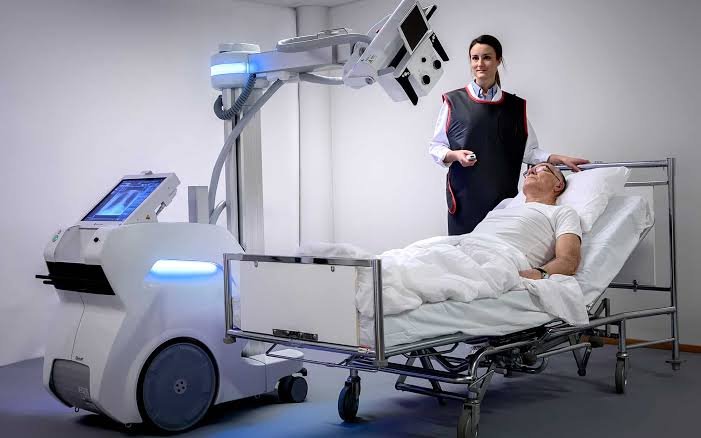
Mobile X-ray imaging has become an important part of modern healthcare, particularly in hospitals where patients may have difficulty travelling to a dedicated radiology room. In intensive care units, emergency departments and other clinical settings, bringing imaging equipment directly to the patient can make examinations more practical. A mobile X-ray system allows radiographers to perform examinations at the bedside while reducing the need to move patients unnecessarily.
What Is a Mobile X-Ray System?
A mobile X-ray system is a radiographic unit designed to move between different areas of a healthcare facility. Unlike fixed imaging equipment installed in a dedicated room, mobile units can be positioned near patients who are unable to travel comfortably.
These systems are commonly used in intensive care units, emergency departments, operating rooms and hospital wards. They can support examinations involving the chest, abdomen and skeletal structures, depending on the equipment’s intended use.
Their mobility makes them particularly useful when patients are critically ill, recovering from surgery or have limited physical movement.
Understanding Portable DR Technology
Digital radiography uses electronic detectors to capture X-ray images and convert them into digital information. A portable DR system combines digital imaging technology with equipment designed for movement and bedside examinations.
Unlike traditional film-based imaging, digital radiography allows images to be viewed on a workstation shortly after acquisition. This can help radiographers check image positioning and quality before completing the examination.
A typical DR system includes an X-ray generator, digital detector, image acquisition workstation and image processing software. These components work together to capture, process and display radiographic images.
Where Are Mobile DR Systems Used?
Mobile digital radiography supports different clinical environments where moving patients to a fixed imaging room may be difficult.
Some common applications include:
- Intensive care units: Bedside chest imaging may be required for patients receiving critical care.
- Emergency departments: Mobile imaging can support examinations when patients need immediate assessment.
- Operating rooms: Portable equipment can assist with imaging during selected surgical procedures.
- Hospital wards: Patients with mobility limitations can undergo certain examinations without travelling to the radiology department.
The exact applications depend on clinical requirements, equipment specifications and the judgement of qualified healthcare professionals.
Mobile X-Ray Systems and Image Processing
Capturing an image is only one part of digital radiography. Image processing also plays an important role in presenting anatomical details for review.
Modern DR systems may include image processing software that analyses acquired images and adjusts their presentation. Features such as noise suppression, brightness optimisation and consistent image display can support radiology workflows.
The quality of the final image also depends on factors such as positioning, exposure selection, detector performance and patient movement. Technology supports the imaging process, but appropriate examination techniques remain essential.
What Should Healthcare Facilities Consider?
When evaluating a mobile X-ray system, healthcare facilities should consider manoeuvrability, detector handling, battery performance, image quality, connectivity and ease of operation.
It is also important to assess how the equipment integrates with existing hospital information systems, including Picture Archiving and Communication Systems (PACS) and Radiology Information Systems (RIS).
In addition, staff training, equipment maintenance, infection prevention and radiation protection procedures should be part of the implementation plan.
Supporting Imaging Beyond the Radiology Room
Mobile digital radiography provides healthcare professionals with another way to perform diagnostic imaging when patients cannot easily reach fixed equipment. By combining mobility, digital detectors and image processing, a portable DR system can support bedside examinations across different hospital departments.
Understanding how these technologies work helps healthcare facilities evaluate imaging requirements and make informed decisions about their radiology infrastructure.
This material is educational and is not a substitute for professional medical advice, diagnosis, or treatment.
 Fig. 71
 Fig. 62
 Fig. 79